
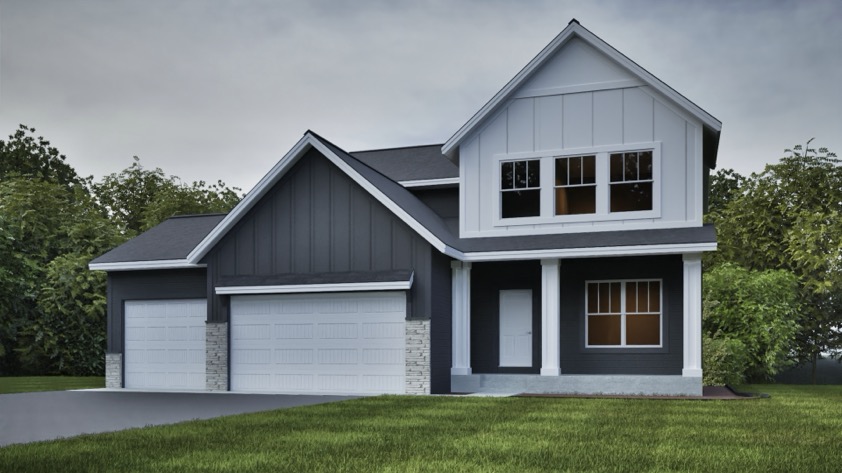
You find a floor plan you love. The layout works, the style feels right, and the starting price fits within the budget you had in mind.
So, is that what your new home will cost?
Not necessarily.
When you're planning a new construction home, the price of the home itself is only one part of your total project investment. Your land, site conditions, utilities, permits, driveway, landscaping, and the selections you make for your home can all affect the final cost.
Understand those additional costs early is one of the best ways to establish a realistic budget, and avoid surprises later in the building process.
At Price Homes, we encourage buyers to think about their total project investment in three main pieces:
Home Price + Land Price + Site Development Costs = Total Project Investment
Let's break down what that means and some of the costs you should consider beyond the starting price of your new home.
What Does the Starting Price of a New Construction Home Include?
A builder's starting price generally represents the cost of constructing the home with a defined set of standard features and specifications.
At Price Homes, what's included depends on the home and product series you're considering. The floor plan, square footage, foundation, included features, finishes, and level of customization can all affect the home price.
The important thing to understand is that the home price and total project investment aren't always the same number.
Some costs are tied directly to the home you choose. Others are determined by where you choose to build it.
That's where land and site-development costs come into the picture.
1. The Cost of Your Land
If you don't already own land, the cost of your homesite needs to be factored into your overall budget.
Land prices can vary considerably depending on location, lot size, development, available utilities, neighborhood, acreage, and other factors.
But purchase price of land isn't necessarily the less expensive place to build.
For example, one property may have city water and sewer available, utilities near the building site, and existing road, and minimal grading needs. Another may cost less to purchase but require a private well, septic system, long driveway, tree clearing, utility extensions, and significant site preparation.
That's why we recommend looking at both the purchase price and development requirements when evaluating land.
Already own your property? You've already account for one major piece of your total project investment, but there may still be site-development costs to consider.
2. Site Preparation & Grading
Before you home can be built, the property needs to be prepared for construction.
Depending on the lot, that may include:
- Tree and vegetation clearing
- Construction access
- Excavation
- Importing or moving fill
- Soil corrections
- Demolition of existing structures
- Grading and drainage work
This is one of the areas where costs can vary significantly from one property to another.
A relatively flat developed lot may require minimal preparation, while raw acreage, a heavily wooded property, challenging soils, or significant elevation changes may require considerably more work.
Even the home itself can affect site-development costs. A slab-on-grade home, full basement and walkout basement each interact with the property differently.
Our Site Preparation & Grading Guide in the Price Homes Knowledge Center goes deeper into these variables and provides typical pricing examples to help you understand what may apply to your property.
3. Driveway & Utilities
Another costs buyers don't always consider when looking at a home price is getting from the road to the house.
How far your home sits from the road can affect both your driveway and utilitiy costs.
A longer driveway can mean additional excavation, grading, base material, asphalt, and potentially culverts. Utilities such as electricity and natural gas may also need to travel farther to reach the home.
This becomes particularly important when building on acreage or ruaral property where you may want the home positioned farther from the road.
Where you place the house on the property can therefore become a budget decision, not just a design decision.
Our Driveways & Utilities Guide explains what's included in Price Homes' standard pricing and provides more information about extended driveways, utility runs, culverts, and other potential costs.
4. Well & Septic or City Water & Sewer
Your property also needs water and wastewater service.
What that looks like depends largely on where you're building.
Many developed lots connect to municipal water and sewer systems. Rural properties and acreage commonly require a private well and septic system instead.
If a well is required, factors such as depth, geology, casing requirements, and placement can affect cost.
For septic systems, the property's soil conditions and required system design can make a significant difference. A standard septic system and a mound or pressurized system, for example won't necessarily carry the same price.
City water and sewer connections can also come with connections, access, or other jurisdiction-specific costs.
Our Wells, Septic Systems & City Water/ Sewer Connections Guide breaks down these options and includes typical Price Homes pricing to give buyers a better idea of what to expect.
5. Permits & Local Requirements
Where you build matters for another reason; every jurisdiction can have different requirements.
Cities, townships, and counties may have thier own building permits, plan-review fees, inspections, driveway requirements, utility requirements, and other regulations.
Because those requirements vary by locations and project, permitting isn't always something that can be represented by one standard number in the advertised price of a home.
The good news is that you aren't expected to navigate that process by yourself. Price Homes coordinates the permitting process for our projects and works with the appropriate jurisdictions throughout construction.
Our Permits & Jurisdiction Requirements Guide explains the process in more detail, including what can affect permitting costs.
6. Landscaping, Final Grading & Retaining Walls
It's easy to spend so much time thinking about the house that you forget about everything surrounding it.
Once construction is nearing completion, your property may still need items such as:
- Final grading
- Seed or sod
- Irrigation
- Rock or mulch
- Trees and shrubs
- Erosion control
- Retaining walls
What your property requires will depend on the lot itself and what you want the finished yard to look like.
Elevation changes can also play a major role. Some properties may require retaining walls or additional grading to properly manage slopes and drainage.
Planning for these items early gives you a more complete picture of your total investment rather than reaching the end of construction with an unfinished yard you didn't account for.
Our New Construction Landscaping & Retaining Walls Guide covers these considerations and typical costs in greater detail.
What About Upgrades and Custom Selections?
Site costs aren't the only reason your final home price may differ from a starting price.
The selections you make for the home itself matter too.
Depending on the home and Price Homes product series you choose, you may have opportunities to personalize or customize elements such as cabinetry, countertops, flooring, fixtures, fireplaces, exterior materials, windows, layout, and other features.
Think of the starting price as the beginning of the conversation.
It helps you understand where a particular home or floor plan begins, while your final home price reflects the home you ultimately choose to build.
This is why it's important to compare builders based on more than the number shown next to a floor plan. Understanding what is included in that price is just an important as the price itself.
So, How Much Will My New Construction Home Actually Cost?
There ins't one percentage or dollar amount you can simply add to every starting home price.
And that's because every project is different.
Two buyers could choose the same floor plans and end up with different total project investments based on their land, site conditions, location, utilities, foundation, selections, and other project-specific needs.
One property may already have utilities at the road and require very little grading.
Another could require tree clearing, a long driveway, a well and septic-system, additional fill, and retaining walls.
The house may be the same.
The project isn't.
That's why the better questions isn't simply:
"How much does this house cost?"
It's:
"How much will it costs to build this house on my property, with the features I want?"
How Can I Avoid Unexpected Costs When Building a Home?
Starting asking questions early.
If you're still shopping for land, involve your building before purchasing the property whenever possible. A builder can help you identify characteristics of the lot that could have a significant impact on your construction budget.
If you already own land, learning as much as possible about the property early in the process can help establish a more accurate budget.
Consider questions like:
- Are city water and sewer available?
- If not, can the property support a septic system?
- Where are electricity and natural gas located?
- How far will the home sit from the road?
- Will trees need to be cleared?
- Is the property flat, sloped, or low?
- Are there soil concerns?
- What foundation style makes sense for the lot?
- Are there wetlands, easements, or setbacks?
- What will be required for the driveway?
- What landscaping will be needed after construction?
You don't need to have all of these answers before talking to a builder.
In fact, that's part of why having these conversations early can be so valuable.
A Starting Price Is a Starting Point, Not the Whole Story
Seeing a starting price on a floor plan is helpful. It gives you a place to begin comparing homes and understanding what may fit within your budget.
But your goal shouldn't be to simply find a house with the right starting price.
Your goal should be to understand your total project investment.
That means looking at the home, land, site development, and the choices you'll make along the way.
The more you understand those pieces before construction begins, the better equipped you'll be to make decisions that align with your priorities and budget.
That's also why we created the Price Homes Knowledge Center.
There, you can dig deeper into some of the biggest variables that affect the cost of building a new home, including:
- Site Preparation & Grading
- Driveways & Utilities
- Wells, Septic Systems & City Water/ Sewer Connections
- Permits & Jurisdiction Requirements
- New Construction Landscaping & Retaining Walls
Each guide explains what you may encounter, what can affect the cost, and typical Price Homes pricing where applicable.
Explore the Price Homes Knowledge Center ➡️
Ready to Find Out What Your Project Could Cost?
Online pricing and educational resources can help you establish a starting point.
But when you're ready to understand what it could actually cost to build your home on your property, that's where a project-specific estimate becomes valuable.
If you already have land, plans, sketches, inspiration, or even an estimate from another builder, send us what you have.
Our team can review your project and help you better understand what it may take to bring it to life.