
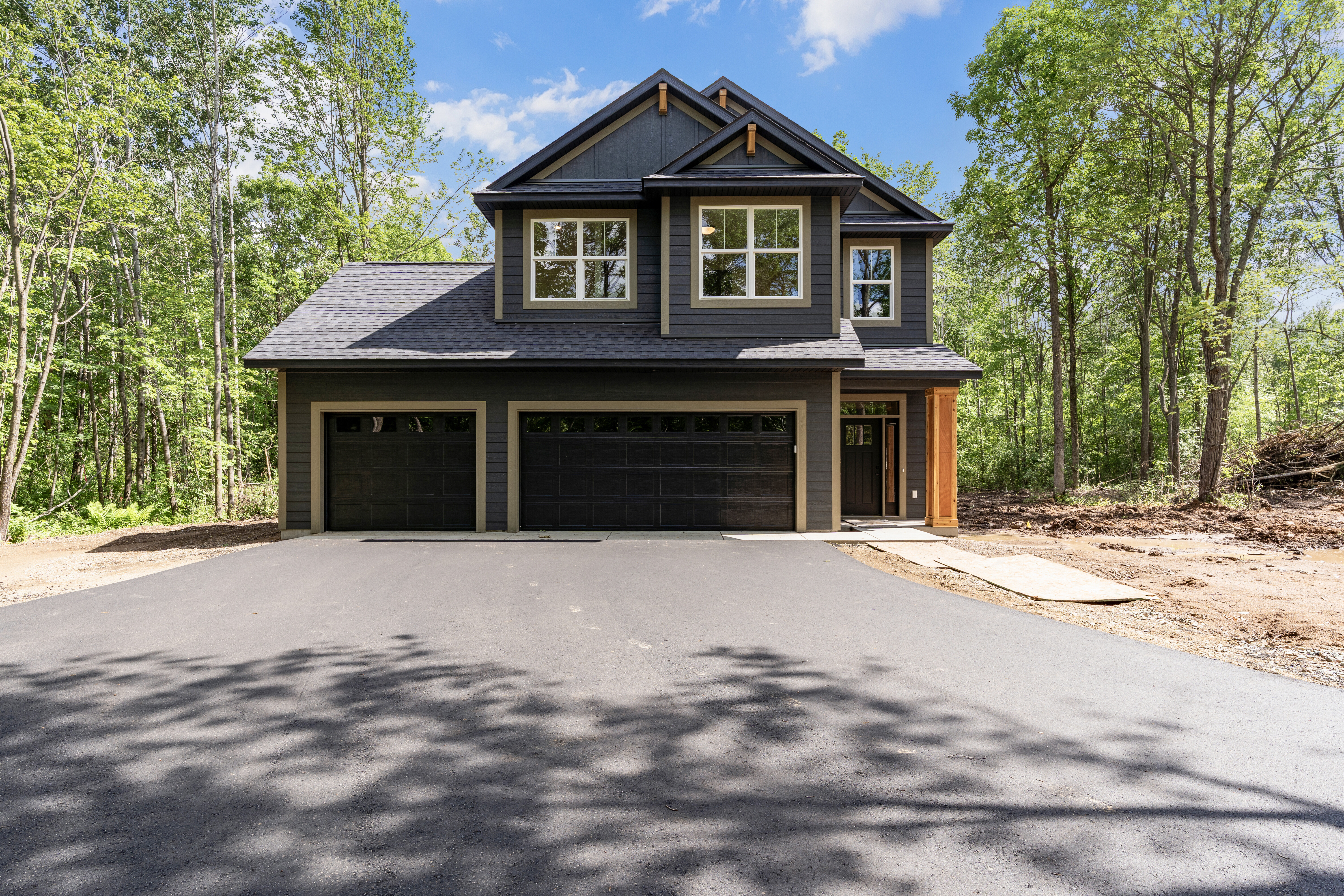
Driveways & Utilities
What's Built, What's Buried, and What Drive the Cost
Your driveway and your utility runs are two of the most important and most under-discussed pieces of a new home build. They're also two of the biggest sources of "surprise" cost when they aren't planned for up front.
Below we will go over how we build driveways, what your options are, how utilities get run to your new home, and the things a buyer should think about before signing a contract.
Driveways
What's Included in Our Standard Pricing
Our standard pricing includes a 50-foot asphalt driveway, meaning we do the grading, the base, compaction, and the asphalt itself. Anything beyond 50 feet is price at $135 per linear foot for additional driveway length, which covers the additional base, asphalt, and the utility extension that usually runs alongside it.
How We Actually Build a Driveway
An asphalt driveway is only as good as what's underneath it. The work below the surface is what determines whether the driveway lasts five years or twenty-five.
-
Grading. We cut and shape the driveway to make sure water sheds off of it.
- Sub-grab preparation. We remove organic material (topsoil, roots, sod) and inspect the native soil. If we hit clay or soft material, we excavate deeper and do a thicker base.
- Base. We install a compacted aggregate base; typically several inches of class 5, which is the structural layer that actually carries the weight of vehicles.
- Compaction. Base material is compacted before asphalt goes on top. This is the step that's invisible from above and the step that can get shortcutted by lower-quality builders.
- Asphalt. Residential asphalt in Minnesota is typically placed in a single 2.5-inch lift, which compacts down to about 2" finished. That's standard for a residential driveway.
Asphalt Vs. Gravel: Honest Trade-Offs
Some buyers ask whether they can save money by going with a gravel driveway instead of asphalt.The honest answer:
-
We still do base work either way. Grading, sub-grade prep, class-5 base, and compaction happen regardless. The only step you'd be skipping is the asphalt itself.
- Gravel is high-maintenance. Gravel ruts, washes and migrates. It needs regular re-grading, more rock added every couple of years, and constant attention after heavy rains. In winter it's much harder to plow cleanly, the plow blade either pulls up rock or rides above the surface.
- Asphalt isn't perfect. We want to be upfront about this; asphalt will show some depressions and cracking over time. That's the material doing what it's supposed to do, flexing with frost heave instead of cracking outright. It is not a defect.
- Long-term, asphalt almost always wins. The maintenance burden of asphalt is dramatically lower than gravel. Most homeowners who go gravel up front, end up paying for asphalt within a few years anyway.
Asphalt Vs. Concrete
Concrete is the other option some buyers ask about. Both work in Minnesota, but they behave differently in our climate:
| Asphalt | Concrete | |
| Up-front cost | Lower | Typically 50% higher |
| Lifespan | 10-20 years | 15-40 years |
| Frost Heave | Flexes - small cracks/ depressions normal | Cracks if heaved or undermined |
| Salt & Deicers | Tolerates it |
Salt should not be used on concrete, it can cause spalling (surface flaking) |
| Snow Melt | Dark color absorbs sun, melts faster | Lighter color, melts slower |
| Maintenance | Sealcoat every 2-3 years, occasional crack fill | Minimal - occasional join sealing |
| Repair | Easier, less expensive, patches are visible | Harder and more expensive, patches are visible |
Our default recommendation is for its better frost-heave behavior, and faster snow melt. Concrete is the right call for buyers who specifically want the longer lifespan and lighter look and are comfortable with the higher up-front cost and understand the effects and damage that salt can do to concrete.
Seal Coating: What to Plan For
-
Wait 1 year after install before the first sealcoat, fresh asphalt needs a full warm season to cure.
- After that, sealcoat every 2 to 3 years. In Minnesota, every 2 years is the safe target given our winters.
- Best window is late spring through early fall, when temps stay above 50 degrees.
- Sealcoating is a homeowner expense, not part of the build.
Driveway Length, Width, and Layout
-
Length.First 50 feet are included, beyond that is $135 per linear foot (covers base, asphalt, and utility extension).
- Width. A standard 2-car driveway runs 16' wide. If you want a wider parker pad, a turnaround, or a side parking spur for a trailer or boat, mention it early so we can include it in your bid for accurate pricing.
- Turnarounds. On long rural driveways, a turnaround is a smart add, backing out 200 feet onto a county road is no fun. We can design one in. The typical cost for an asphalt turnaround is $8,50 per sq. ft.
- Snow Storage. Plan for where snow goes when it gets plowed. Driveways pinched between mature trees or close to a foundation create real headaches by January.
- Slope. Driveway slope affects winter driveability. We design slope into the grading plan and make sure we don't exceed a 10% driveway slope.
Culverts
If your driveway crosses a road ditch ,a culvert is required. The county or township set the spec, usually a specific diameter and length of corrugated pipe. Culvert cost is not included in the standard driveway allowance because it varies by site if one is needed or not.
Utilities
Bringing utilities to a new home is half engineering, half scheduling. Each utility: electric, natural gas, and communications comes from a different source and is run by a different contractor. The path the utilities take depends on the lot but typically they follow the driveway. When placing the home farther from the road and utilities added costs from the power and gas company are incurred due to the cost of trenching and material needed.
Electric
-
Where the service comes from. The local utility brings power to a point near the property line (the point of service). From there, the wire from that point into the. house is the homeowner's responsibility, which is built into our scope of work. When the house is placed more than 50' from the road added costs are incurred.
- Underground vs. Overhead. Most new construction in this market now runs underground from the transformer to the meter, which is a cleaner look, no overhead wires across the property, and no tree-related outages. Overhead services is becoming less common.
- Distance to the transformer. If the transformer is far from the house, the utility company chargers a per-foot trenching and wire fee. Typically this cost is $15 per linear ft.
- Service size. 200-amp service is standard for more of our new homes.
Natural Gas vs. Propane
If natural gas is available at your lot, it's usually the cheapest source of heat and hot water in Minnesota. If gas isn't available which can be common on acreage, your practical option is propane (a tank on the lot, typically leased).
What a Buyer Should Think About Up Front
These are the questions worth answering before your finalize a contract:-
Anything past 50' adds cost at $135 per linear foot.
-
If so, you'll need a culvert.
-
If not, plan for propane.
-
If it's a long way, utility costs could be higher.
-
Easier to include now than retrofit later.
-
Default is asphalt, concrete is a paid upgrade for buyers who specifically want it or if the covenants for the development require it.
Quick Pricing Reference
| Item | Typical Cost |
| Standard 50-ft Asphalt Driveway | Included in Base |
| Extended Driveway w/ Utilities (beyond 50-ft) | $135/ Linear ft |
| Culvert (when required) | Typical cost is $3,500 |
| Standard 50' 3-Car Garage Concrete Upgrade | $9,500 |
Note: Final pricing depends on the specific lot, jurisdiction, and utility provider. We firm up exact numbers once we have the site plan utility availability confirmed for your address.
The Bottom Line
Your driveway is the road you drive everyday, in every weather, for the life of the home. Your utilities are the systems that make the home work. Both deserve to be planned, priced, and built carefully, not added in as an afterthought.
Our promise is to put these number on the table up front, build them right the first time, and explain the trade-offs so you can make the call that fits your lot, your home, and your budget.